
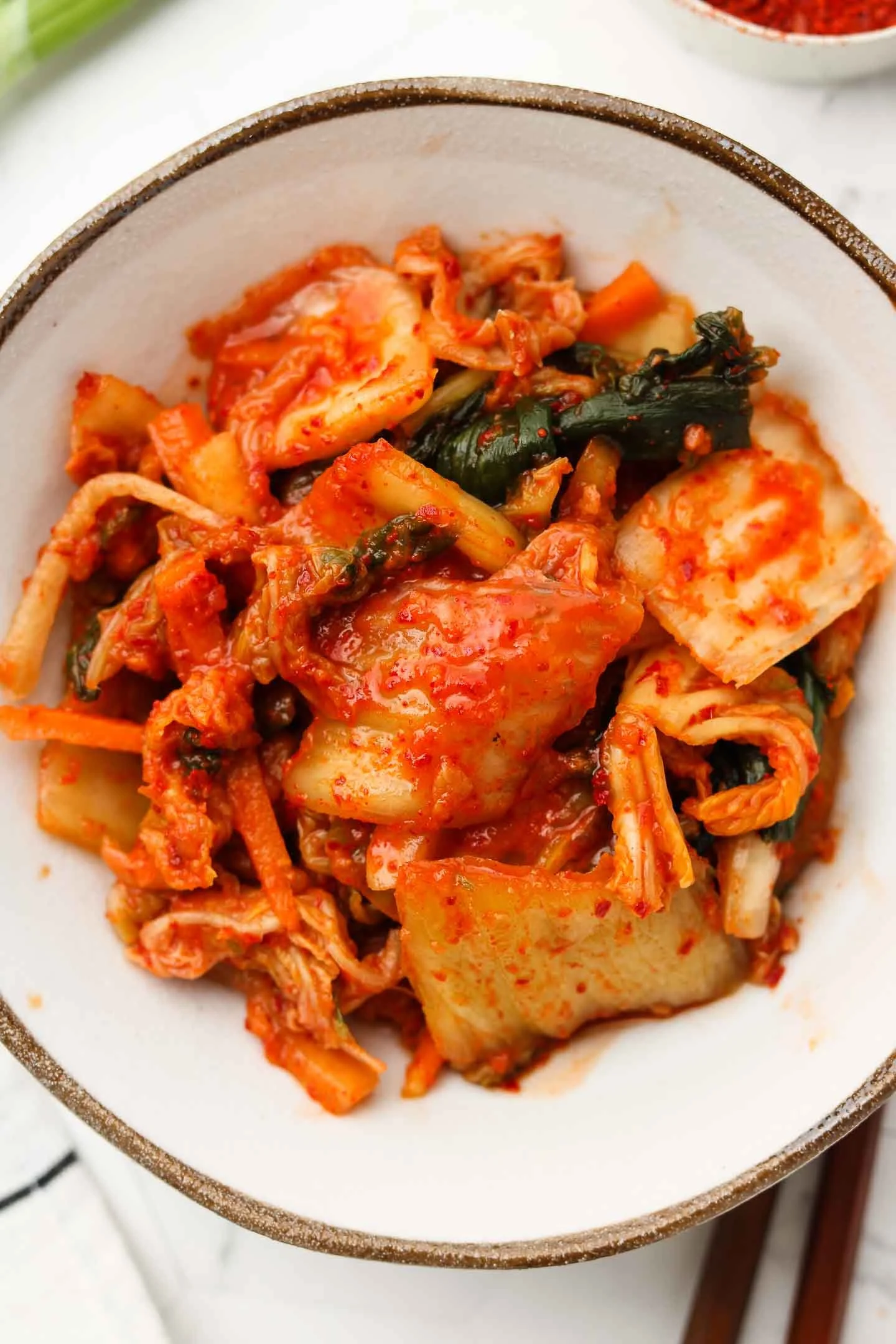
The tangy aroma wafts from the jar as I open it, instantly transporting me to the bustling streets of Korea. Vegan Kimchi is a fermented dish that combines crunchy vegetables with a flavorful, spicy paste. The fermentation process takes a few days, but the result is a vibrant side dish that adds a kick to any meal.
This recipe is perfect for anyone looking to embrace the bold flavors of fermented foods. It’s great to prepare in advance for meal prepping or serving alongside your favorite Asian dishes. Once made, the kimchi can be stored in the fridge, where it develops even richer flavors over time.
Why You’ll Love This Recipe
- The perfect balance of crunch and spice enhances any meal.
- A simple fermentation process that anyone can master.
- Versatile enough to be enjoyed in various dishes or on its own.
- Packed with probiotics for a healthy gut.
What You’ll Need
Get ready to gather these fresh ingredients for your Vegan Kimchi.
For the Cabbage
- 1 medium head of napa cabbage (1.75 – 2lbs // 787 – 900 g)
- 1/4 cup + 2 tbsp coarse sea salt
For the Seasoning Paste
- 1 heaping tbsp (12 g) sweet rice flour
- 2/3 cup (180 ml) kombu dashi or vegetable stock
- 1/2 (90 g) fuji apple, asian pear or persimmon
- 1 small (60 g) onion, roughly chopped
- 4-6 garlic cloves
- 1 tsp minced ginger
- 1/4 – 1/3 cup korean red pepper flakes
- 2 tbsp (30 ml) vegan fish sauce
- 1 tsp salt
For the Vegetables
- 4 stalks of scallions, sliced
- 1 small (40 – 50 g) carrot, sliced into match sticks
- 2/3 cup (100 – 115 g) daikon radish, sliced into match sticks
For Serving
- 1 tsp sesame seeds
Try using sea salt for a finer texture.
Substitutions & Swaps
- Substitute apple with pear or persimmon.
- Use regular vegetable stock instead of kombu dashi.
- Replace vegan fish sauce with soy sauce for a different flavor.
- Adjust gochugaru to taste for spice level.
How to Make It
Start your kimchi adventure with these simple steps.
1. Prepare the Cabbage
Slice the cabbage into half. Then slice each half into quarters and chop into 1-inch pieces. Add the chopped cabbage to a large bowl and massage in the coarse sea salt. The cabbage will start to wilt and release water; cover the bowl and let it sit for 1-2 hours. The cabbage is ready when it bends without snapping.
2. Make the Seasoning Paste
Add the sweet rice flour and kombu dashi to a saucepan over medium heat, whisking until combined. Cook for around 10 minutes or until it thickens. Remove from heat and let it cool.
3. Rinse and Drain the Cabbage
Once the cabbage is ready, rinse it thoroughly under cold water and drain well. Allow it to sit in a colander over a bowl for about 30 minutes to ensure excess moisture is removed.
4. Blend the Seasoning Ingredients
In a food processor, add the sweet rice flour paste along with the apple, onion, garlic, ginger, gochugaru, vegan fish sauce, and salt. Blend until a smooth paste forms.
5. Combine the Ingredients
Return the drained cabbage to the bowl. Add the carrot, daikon, scallion greens, and kimchi paste. Put on gloves and massage the mixture thoroughly into the vegetables until evenly coated.
6. Pack the Kimchi
Transfer the mixture into an airtight container, using your hands to pack down the kimchi. Ensure everything is submerged in the juices to prevent oxidation.
7. Ferment the Kimchi
Close the lid and leave the container at room temperature for 2 days without opening it. This allows the fermentation process to begin.
8. Taste and Adjust
After 2 days, open the container and give it a taste. If you prefer a more tangy flavor, let it sit for an additional 24 hours.
9. Store for Later
Once fermented to your liking, store the kimchi in the fridge for 1-2 months for optimal freshness or up to 1 year for a stronger flavor. Discard any kimchi that shows signs of surface mold.
How to Store It
Fridge: 1-2 months in an airtight container.
Freezer: No, as it affects texture.
Reheat: Not necessary; enjoy cold or at room temperature.
Tips for Best Results
- Massage the cabbage well for better salt absorption.
- Let the mixture ferment in a cool, dark place.
- Always use clean utensils to prevent contamination.
- Taste regularly to find your perfect fermentation point.
Serving Suggestions
- Serve alongside rice and stir-fried vegetables for a complete meal.
- Add to tacos for an Asian twist on a classic.
- Incorporate into salads as a zesty dressing alternative.



Leave a Comment