
When I was young, the scent of my grandma’s kimchi wafted through her kitchen, warm and inviting, signaling that a family feast was about to begin. This cherished recipe, My Grandma’s Kimchi (Kimchee), takes a few hours to prepare but yields a tangy, crisp condiment that brings life to any dish. The secret lies in the balance of salt and spice, perfect for lifting flavors.
This recipe is for anyone who loves bold flavors or wishes to try their hand at fermentation. It’s an excellent addition to a family dinner or a weekend gathering. Kimchi also keeps well, making it perfect for meal prep.
Why You’ll Love This Recipe
- The vibrant crunch of fresh ingredients provides satisfying texture.
- The fermentation process enriches the depth of flavor over time.
- It’s a versatile dish that pairs wonderfully with many meals.
- Making kimchi at home allows for customization of spice levels.
What You’ll Need
Gather these essential ingredients for your homemade kimchi:
For the Cabbage
- 1 large Napa cabbage, core removed and quartered
- 1/2 cup salt
- Water to soak cabbage
For the Kimchi Paste
- 1 tablespoon grated ginger
- 1 tablespoon minced garlic
- 1 tablespoon sugar
- 3 tablespoons Korean red pepper flakes (gochugaru)
For the Add-ins
- 4 green onions, chopped
- 2 tablespoons fish sauce
- 1 carrot, julienned
- 1 small daikon radish, julienned
Use sea salt for best results.
Substitutions & Swaps
- Napa cabbage can be replaced with green cabbage.
- Gochugaru can be swapped for red pepper flakes, but adjust quantity.
- Fish sauce can be omitted for a vegetarian option.
- Daikon radish can be replaced with any radish variety.
How to Make It
Start your kimchi journey with these simple steps.
1. Quarter and Cut Cabbage
Begin by quartering the Napa cabbage and removing the core. Cut each quarter into bite-sized pieces.
2. Soak Cabbage
Place the cabbage in a large bowl and add the salt. Cover the cabbage with water and allow it to soak for 1-2 hours, weighing it down with a plate to ensure the cabbage is submerged.

3. Rinse Cabbage
After soaking, rinse the cabbage thoroughly under cold water to remove excess salt, and drain well.
4. Prepare Paste
In a large mixing bowl, combine the grated ginger, minced garlic, and sugar. Add the Korean red pepper flakes and mix well to form a paste.
5. Mix in Add-ins
Stir in the fish sauce until everything is well combined, then add the green onions, carrot, and daikon radish to the paste.
6. Coat Cabbage
Wearing gloves to protect your hands from the spice, gently massage the paste into the drained cabbage, ensuring every piece is coated.
7. Pack Kimchi
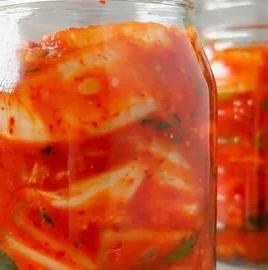
Pack the kimchi mixture tightly into a clean glass jar, leaving some space at the top for expansion as it ferments.
8. Ferment
Loosely cover the jar with a lid (or cheesecloth secured with a rubber band) and let it sit at room temperature for 1-2 days to begin the fermentation process. Keep it out of direct sunlight.
9. Refrigerate
After the initial fermentation, press down on the kimchi to submerge it in its own juices, seal the jar tightly, and store it in the refrigerator.
10. Mature
Allow the kimchi to mature in the fridge for at least a week before consuming for the best flavor, but it can be enjoyed sooner if preferred.
How to Store It
Fridge: Keep in a sealed glass jar for up to 2 months.
Freezer: No, it affects texture significantly.
Reheat: Not necessary; enjoy it cold or at room temperature.
Tips for Best Results
- Ensure the cabbage is submerged during the soak for even salting.
- Adjust the amount of gochugaru to suit your spice tolerance.
- Always use clean utensils to prevent contamination.
- Taste the kimchi before storing to assess fermentation.
Serving Suggestions
- Serve kimchi as a side dish with grilled meats.
- Add kimchi to rice, noodles, or stir-fries for extra flavor.
- Use kimchi as a topping for tacos or sandwiches for a spicy twist.

Leave a Comment