
One bite of homemade kimchi is all it takes to feel transported to a bustling Korean market, filled with the vibrant aromas of fermented vegetables. This deliciously tangy condiment takes just a few hours of prep and a few days of fermentation to achieve a depth of flavor that’s simply irresistible. The balance of spicy and savory in this dish works beautifully, making it a perfect accompaniment to many meals or a great snack on its own.
This recipe is great for anyone looking to explore Korean cuisine or wanting to add a healthy, probiotic-rich food to their diet. It’s a fantastic project for weekends or meal prepping. Once prepared, kimchi can be stored in the fridge for several weeks, getting even better as it ages.
Why You’ll Love This Recipe
- The crunch of fresh vegetables delivers a satisfying texture.
- Fermentation allows for deeper, richer flavors over time.
- Simple, straightforward ingredients make it easy to whip up.
- A traditional recipe that’s fun and rewarding to make at home.
What You’ll Need
Gather these fresh ingredients to make this delightful kimchi.
For the Kimchi
- 1 head Napa cabbage, cored and shredded
- 1 bunch green onions, chopped
- 1 cup carrots, shredded
- 1 tablespoon ginger, fresh, grated
- 3 cloves garlic, crushed
- 1/2 teaspoon dried chili flakes
- 1-1/2 teaspoons sea salt
- 1/4 cup plus 1 tablespoon whey (*)
Whey is optional for fermentation; use saltwater instead.
Substitutions & Swaps
- Savoy cabbage for Napa cabbage
- Chopped onion for green onions
- More or less chili flakes to taste
- Onion powder instead of fresh onion
How to Make It
Start your fermentation adventure with these clear steps.
1. Chop or shred
Chop or shred the cabbage, carrots, green onions, ginger, and garlic by hand or using a food processor.
2. Combine ingredients
Combine all ingredients in a medium or large bowl.
3. Let it sit
Cover with a tea towel and let sit at room temperature for 1/2 hour to allow the salt to draw out the juices from the vegetables.
4. Pound the mixture
Pound the mixture a few times with a potato masher or meat hammer (or kraut pounder) to help it get juicy. If it doesn’t look wet enough, let it sit for another 1/2 hour.
5. Transfer to jar
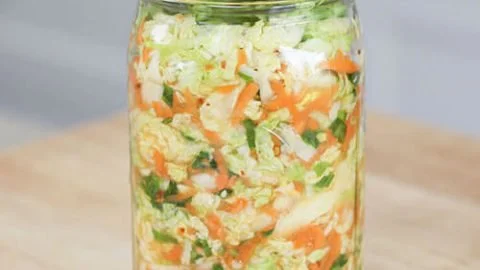
Transfer the ingredients to a clean quart-size, wide-mouth jar, leaving 1" space at the top.
6. Press down the mixture
Press down firmly to encourage liquid to cover the vegetables.
7. Secure the jar
Add weights if using, put on the lid and band, and screw tightly.
8. Ferment
Allow the kimchi to ferment at room temperature for three to seven days.
9. Burp the jar
After 12-24 hours, open the jar and press down firmly on the ingredients to ensure the brine covers them. Burp the jar daily to avoid air buildup.
10. Skim and taste
Skim off any mold or fuzz that develops on top and taste every few days until it reaches your desired flavor and texture.
11. Refrigerate
Once ready, transfer to the refrigerator or cool storage.
How to Store It
Fridge: up to several weeks in a sealed jar
Freezer: no, it affects texture
Reheat: n/a, enjoy cold or at room temperature
Tips for Best Results
- Use fresh, crispy vegetables for the best crunch.
- Keep the jar on a towel or tray to catch any overflow during fermentation.
- Adjust fermentation time based on temperature and desired tanginess.
- Always ensure ingredients are submerged in brine to prevent spoilage.
Serving Suggestions
- Serve as a condiment alongside rice or dumplings.
- Use as a topping for tacos or sandwiches for a spicy twist.
- Pair with grilled meats for a refreshing contrast.




Leave a Comment